
What is short break fostering?
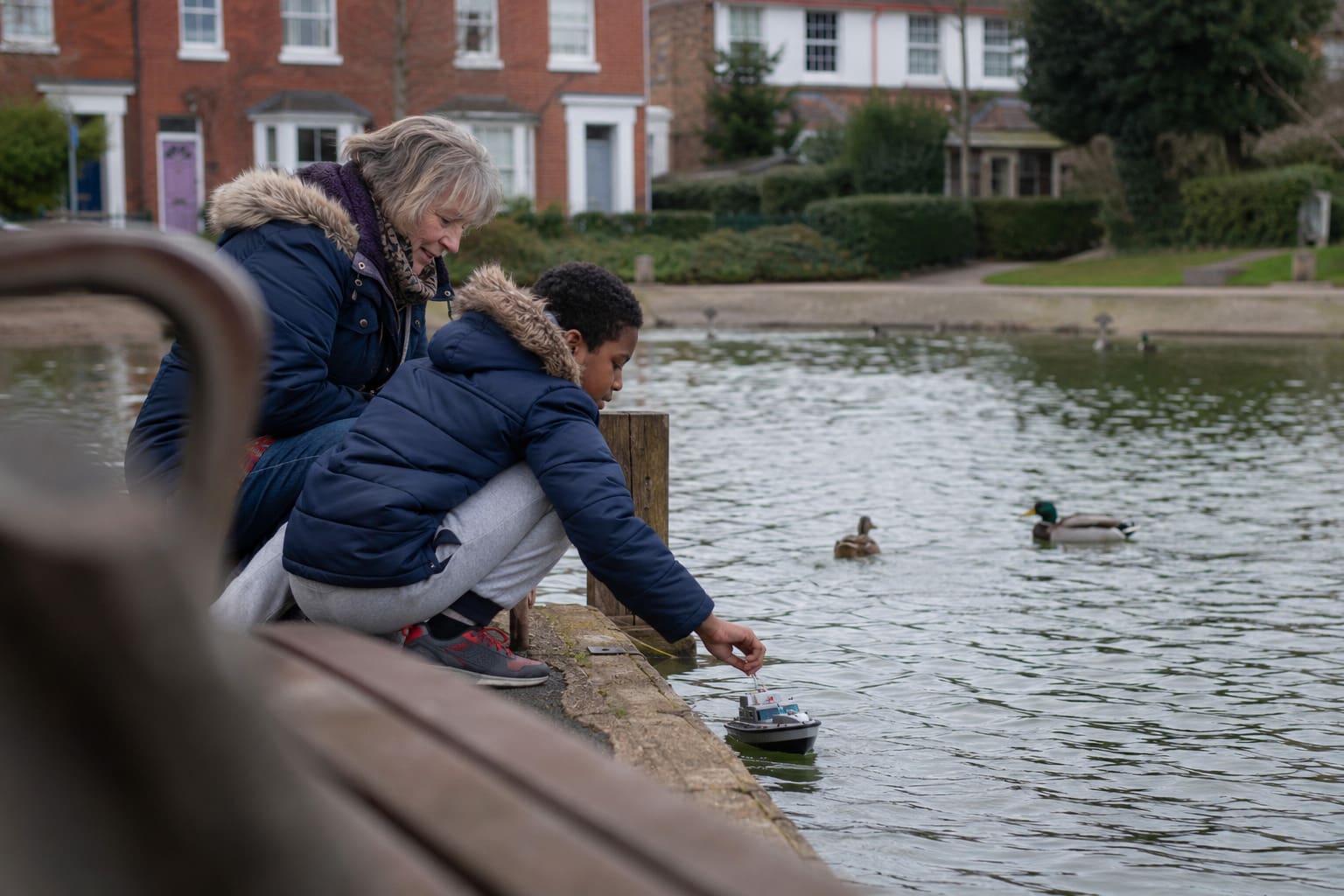
Not everyone who wants to foster can offer a home seven days a week, every week. Short break fostering, still called respite in a lot of places, is the version of the role that runs to a different rhythm: the same child, the same house, one or two nights at a time, planned months ahead. It is the least understood type of foster care in England and one of the few that is growing. Here is what it actually involves, what the law says about how long a stay can be, and what it asks of you.
The short answer
Short break fostering means a child stays with you for a short, planned period and then goes home again, and the same thing happens again a few weeks later. You are not filling in for someone. You are one of the regular fixtures in that child’s year, and the point of the arrangement is that it is the same house and the same faces every time. Two families depend on it: the child’s own family, who get the breathing space that lets them keep going, and in some cases another foster family, who get the same.
It is real fostering. You go through the same assessment, you go to the same fostering panel, and you are approved as a foster carer in the ordinary way. What differs is how much of the year you are actually caring, and a handful of rules that change to reflect that.
Two different things get called short breaks
This is where most explanations go wrong, because the phrase covers two arrangements that feel quite different from the inside.
The first is a service for disabled children and their families. Local authorities in England have a specific duty here, set out in the Breaks for Carers of Disabled Children Regulations 2011. Regulation 3 requires them to have regard to the needs of parents “who would be unable to continue to provide care unless breaks from caring were given to them”, and also to parents who could care more effectively if a break let them “undertake education, training or any regular leisure activity”, “meet the needs of other children in the family more effectively”, or “carry out day to day tasks which they must perform in order to run their household”. That is unusually plain language for a statutory instrument, and it tells you exactly what the service is for.
Regulation 4 then requires councils to provide a range that includes daytime care, overnight care, activities outside the home, and help “in the evenings, at weekends and during the school holidays”. Regulation 5 requires them to publish a short breaks services statement saying what they offer and who qualifies, and to keep it under review. If you want to know what is available where you live, that published statement is the document to ask for by name.
The second is a break for another foster family. A child living with a full-time foster carer may spend an occasional weekend with a second, separately approved household, so the carer can go to a wedding, sit an exam, recover from an operation or simply sleep. Fosterline describes both versions in one breath, and puts the emergency case plainly: it “may happen on an emergency basis if a full-time foster carer needs urgent support due to circumstances such as ill health or bereavement.”
Same approval, same training, different reason for the phone ringing. Many short break carers do both.
The rule almost nobody explains: 17 days and 75 days
There is a precise legal definition of a short break, and it matters, because it decides which set of rules the whole arrangement runs under. It appears twice in almost identical words, once in the Fostering Services (England) Regulations 2011 and once in the Care Planning, Placement and Case Review (England) Regulations 2010.
Regulation 42 of the fostering regulations sets the test. The arrangement counts as short breaks where the child is not in the care of a local authority and is placed in a series of short-term stays with the same foster carer, and:
- “no single placement is intended to last for more than 17 days”,
- at the end of each one the child returns to their parent, or to whoever else holds parental responsibility, and
- “the short breaks do not exceed 75 days in total in any period of 12 months”.
Regulation 48 of the care planning regulations says the same thing, and then sets out what changes as a result. Those two numbers are the boundary of the whole arrangement. Seventeen days is roughly a school holiday. Seventy-five days a year is a night or two most fortnights, or a run of longer stays across the summer, or something in between. Go past either, and the arrangement stops being a short break in law and becomes an ordinary fostering arrangement with the full set of requirements attached.
Two things follow that people find reassuring. The child is not in the care of the council: their parents keep parental responsibility throughout and the child goes home at the end of every stay. And the arrangement has a shape, agreed in advance, that you can plan a year around.
What the paperwork looks like
Because the child is with you in short bursts rather than continuously, the timetable of visits and reviews is rewritten. Regulation 48 replaces the usual schedule with one built for the pattern.
- There is a care plan, but a modified one. It has to set out the arrangements for the child’s health and their emotional and behavioural development, “in particular in relation to any disability C may have”, how the child stays in touch with their family while they are with you, their leisure interests, and how their education will be supported. It must name their GP.
- The child’s social worker must visit while the child is actually with you, at intervals agreed with the independent reviewing officer and the child’s parents and written into the care plan before the first stay. The first visit happens within three months of the first stay, “or as soon as practicable thereafter”, and after that at intervals of no more than six months.
- Reviews follow the same rhythm: the first within three months of the first stay, then no more than six months apart, for as long as the arrangement continues.
Compare that with an ordinary fostering arrangement, where the first review falls within 20 working days. The short break version is deliberately lighter, because a child who comes for two nights every third weekend does not need the machinery of a full care plan reviewed as though they had moved in.
The National Minimum Standards are modified too, and say so in terms: “Both the 2011 Regulations and the NMS are modified in relation to short breaks.” One practical effect is that there is no need for a separate written plan covering each individual stay: the short break care plan carries those elements instead. Standards 2.5 and 2.7 do not apply, and neither do standards 9 or 12 in full, though a short break carer still has to know how to keep the child in touch with their family in whatever way the care plan sets out.
Getting approved
Nothing is watered down here. Short break carers are assessed and approved exactly as every other foster carer is, and Fosterline is explicit that they go through the same approval process. You will have the home visits, the checks, the references and the full written assessment, and your report goes to a fostering panel, which recommends both whether you should be approved and the terms of that approval: the ages and number of children you can care for. If you want the detail of what that looks like end to end, our guide to the different types of foster care sets out where each one sits.
The eligibility rules are the ordinary ones. You do not need to be married, and you do not need to be young: we have written separately about whether single people can foster and about fostering after 55, and the answer in both cases is yes. Short breaks in particular suit people who work, because the caring falls at weekends and in the holidays and the dates are known well ahead.
Training and supervision
You do the same preparation training before approval, and the same first-year learning afterwards. The one difference worth knowing about is that the Training, Support and Development Standards, the national benchmark every new foster carer works through, exist in a second version written for this role. The government’s guidance for supervising social workers says so directly: “We have developed Training Support and Development Standards for Short Break Carers, that are relevant to the task of carers offering short breaks for children and young people who have a disability or complex health needs.” Each service decides which version fits a particular carer, so it is a fair question to ask at your first conversation.
Supervision is scaled to the role as well. National Minimum Standard 21 says the frequency of meetings for short break carers “should be proportionate to the amount of care provided”, which is sensible, and worth reading alongside what you would actually get: you still have your own named supervising social worker, the same out of hours support and access to the same training programme as everyone else.
What you get paid
South Coast pays a single weekly fee per child that combines the allowance and the professional fee. As of today those are £479.50 a week for a child of ten and under, and £507.50 a week for a child of eleven and over, with roughly £90 and £100 of that meant to be spent directly on the child. The full picture, including our enhanced rates and the monthly contribution towards council tax, is on our pay and allowances page, and we have written up how foster carer pay works in full.
Short breaks are the one situation where the weekly structure needs explaining, because a stay may be two nights rather than seven, and how that is worked out should be agreed with your agency before the first stay rather than discovered afterwards. Ask the question early. Fosterline notes that short break carers are self-employed like every other foster carer, and that payment may be based on the nights or hours of care provided.
Tax is more generous than people expect. Fostering income is covered by Qualifying Care Relief, and most carers pay little or no tax on it. The rule that catches people out here is a helpful one: the Low Incomes Tax Reform Group states that “the full weekly amount is available for any part-week when you have a person in your care. For example, if a person arrives on a Thursday, the full weekly allowance is available for that week.” A weekend stay is a full week for relief purposes. We have set out the whole system in our guide to whether foster carers pay tax.
Please note: this is general information about how fostering payments and tax relief work, not personal financial advice. Thresholds are uprated most years. Check your own position against the Low Incomes Tax Reform Group’s fostering pages or with an accountant, and confirm payment arrangements with your own fostering service.
A small part of the system doing a lot of work
Short breaks are a small slice of fostering capacity in England and a growing one. Ofsted’s figures for the year to 31 March 2025 record 1,765 household places used exclusively for short breaks, “equivalent to 3% of all approved mainstream places”, and note “a net increase of 41% in short-break places since 2021”. That growth is happening while the overall number of fostering households falls, which tells you something about where services think the pressure is.
It also explains why the National Minimum Standards, in the standard on recruiting carers, say that planning for future demand “covers the need for short breaks for disabled children”. Services are being told to think about this specifically, and there are not enough people doing it.
What it asks of you that full-time fostering does not
Three things, honestly.
You say goodbye every time. A full-time carer builds a relationship in one long stretch. You build the same relationship in weekends, and each one ends with the child going home. Carers who do this well describe it as a different skill rather than an easier one: you have to make a child feel completely at home in a house they will leave on Sunday, and be glad they are leaving.
You have to know the detail cold. A child who arrives for 48 hours cannot afford a weekend spent working out how their medication is given, what they eat, what frightens them and how they settle. Everything has to be handed over properly and written down, which is why the record keeping matters as much as it does in any other kind of fostering. Our guide to what foster carers have to write down applies here in full.
You are part of someone else’s plan. The parents, or the full-time carer, remain the people running that child’s life. Your job is to be a reliable, well-briefed, warm part of the arrangement, not to redesign it. Some people find that freeing. Others find they want the whole role, and go on to do it, which is a perfectly good outcome too.
Is it a good way to start?
Often, yes, and it is worth being straight about why. You get the real experience of caring for a child who is not yours, with the training and supervision behind you, at a scale that fits around a job. Plenty of people begin here and later widen their approval to full-time care, or to a specific type such as caring for a baby or parent and child fostering.
But do not choose it because it looks like a smaller commitment. Being the family a disabled child has stayed with one weekend in three since they were seven is not a small commitment. It is a long, quiet, deeply reliable one, and the value of it is precisely that it does not change.
You won’t have to do this alone
Whichever version of the role fits your household, you will have a named supervising social worker of your own, an out of hours service that answers when the office is shut, and a training programme that starts before your first stay and carries on afterwards. We would rather have a long conversation with you now than have you guess. If short breaks turn out not to suit you, we will say so, and if something else fits better we will tell you that too.
A child isn’t just given a home, they’re given a chance. Even a weekend of it counts.
Or register your interest and we will call you back at a time that suits.
Frequently asked questions
How long can a short break last?
No single stay is intended to last more than 17 days, and the stays together must not exceed 75 days in any 12 month period. Those limits come from regulation 42 of the Fostering Services (England) Regulations 2011 and regulation 48 of the Care Planning, Placement and Case Review (England) Regulations 2010. If an arrangement goes beyond them it is no longer a short break in law.
Do I need a spare bedroom for short break fostering?
Usually yes, on the nights the child is with you, and the room does not have to sit empty the rest of the time as long as it is genuinely available and set up for them. We go into what is actually required in our article on whether you need a spare bedroom to foster.
Can I do short breaks alongside a full time job?
This is one of the reasons the role exists. Stays are planned well in advance and usually fall at weekends and in school holidays, so a great many short break carers work. Talk to us about your working pattern early and we will be honest about whether it fits.
Is short break care the same as emergency fostering?
No. Short breaks are planned, repeated and agreed with everyone in advance. Emergency care is the opposite: a phone call, very little notice and a child who needs somewhere safe tonight. The one overlap is that a short break carer may be asked to step in urgently if a full time carer becomes ill.
Do I get the same training as other foster carers?
Yes. You do the same preparation course before approval and the same first year programme afterwards, and you have your own supervising social worker. There is a version of the national Training, Support and Development Standards written specifically for short break carers who look after children with a disability or complex health needs, and your service will tell you which set applies to you.